Showing posts with label horror. Show all posts

Wednesday, 27 April 2016

Codes and Conventions of film genres

Codes and Conventions

Action
  • Fights involving weapons such as guns and knives
  • Set in a big/modern city such as London or New York
  • Multiple deaths including that one really liked character
  • Futuristic vehicles and big explosions
  • Cat and mouse chases
  • Villains and Heroes
Comedy
  • It's dependent on the type of comedy but usually set in generic places; bright, well populated towns and cities. 
  • The camera tends to be very naturalistic, medium shots are used generally throughout to present dialogue and facial expressions. 
  • There are many stereotypes, especially if teen comedy and set in a high school. You usually have the dumb person, the smart person and the socially awkward. 
  • Sound is so important with comedy films as the dialogue needs to be extremely clear for it to be funny. 
  • Three significant types of comedy; slapstick, dark humour and wit/wordplay. 
Horror
  • Urban environments - dark streets/ narrow alleyways and empty houses
  • Often dark colours such as red and black to represent darkness, evil and blood etc
  • Common mise en scene objects include masks, weapons and religious icons etc
  • Lighting is expressive and non-nauralistic, where low-key lighting is used to create dark shadows.
  • Always, a hero, a final girl or a villain- most commonly being a man. The hero would most likely have a mission to accomplish ideally to defeat an evil villain. 

Monday, 25 January 2016

Motion Picture Rating System?

Motion Picture Rating System

The reason for a rating system is to monitor the viewing of films depending on the suitability for particular audiences, with the main issues being sex, violence, substance abuse, profanity, impudence and various other types of mature content. They carry age restrictions (or sometimes recommendations).

Various factors may influence the decision of a particular rating of a film, these may include:

  • The country showing the film in their movie theaters/ cinemas. 
  • Whether it's set within a non-fictional historical context.
  • If violence or drug use is shown, whether it is carried out by the protagonist or the antagonist, this is because some viewers tend to sympathise with the protagonist and could potentially encourage drug use. 
Here are a few certificates used to restrict viewers in the United Kingdom:

(This information was extracted from http://www.imdb.com/updates/guide/certificates)

E - Exempt from classification 

U - Universal / Suitable for all 

PG - Parental Guidance / Some scenes may be unsuitable for children

12A - Parental advisory / Children under 12 must be with an adult

15 - Those aged 15 and above

18 - Those aged 18 and above 

R18 - Those aged 18 and above, in specially licensed sex shops or movie theaters/ cinemas. 

Our Film Opening

We need to make the decision as to whether we wish to add an age restriction on to our film opening. Here are some of the ideas we had when making this decision:

12 Rated Movie:
  • Dangerous techniques of violence such as hanging, suicide, self-harming and drowning should not be frequently displayed as they can be copied and appear to be pain and harm free, which is not true. They should not be encouraged. 
  • Scary scenes are allowed and can be intense and last a while but gory moments involving blood and injuries should not come about as a result of violence. 
  • Any substance abuse should be infrequent and cannot teach viewers how to take drugs or appear to be glamorous or attractive. 
  • The film must not approve of language/ behaviour that would offend someone's religion, colour, gender, sexuality or disability as it could be seen as encouraging discrimination. 
  • The themes of the film must be appropriate for those aged 12 and above. 
15 Rated Movie:
  • These rated films may include: strong violence, fairly strong language, portrayals of sexual activity, verbal references to sex, sexual nudity, brief scenes of sexual violence, discriminatory language/ behaviour and substance abuse. 
18 Rated Movie:
  • Strong language has no restrictions with regard to 18 rated films, very strong language can be used aggressively, frequently, directly and accompanied by strong violence.
  • Racist, homophobic and other discriminatory language is allowed. 
  • There may be strong violence that can lead to dwelling on pain and injury as a result.
Target audience - we decided that our film opening isn't suitable for those under the age of 15, we came to this conclusion after looking at the things you would expect in a 15 rated movie. With an 18 rated film there are no limits to violence and language etc whereas with 15 rated films there are still restrictions and are film opening applies to those of 15 rated films. Our target audience is young adults/old teenagers, so this restriction would be perfect.

Sunday, 29 November 2015

The Use of Symbolism in Horror...

Metaphorically a number of aspects of plots, or attributes for misé-en-scene emphasise and highlight the mood, theme and concept of the film itself, they can intensify the tone and depth to the piece and overall play a huge part in the construction especially of props or setting.
The most commonly used symbolic aesthetics to a film include:

  • Religious Symbols: Prevalent especially in the occult genre, due to the nature of opposite mediums of life and death, devil and God, good and evil, inner and outer demons etc, religious symbolic relics can be in reference to satanic, occult or voodoo rituals. Illustrated below with the Devil Inside.

  • Death: Used as a form of foreshadowing for either certain characters or to illustrate it as a distinctive theme with objects such as coffins, gravestones, graveyards, angels of death, skulls, skeletons, corpses etc; for example the disfigured faces in Jacobs Ladder seen below, along with the birds used as a presentation of the body's decay.

  • Colours: Representationally used a symbolisation of a characters powers or nature as either good or evil. The colours such as red despite being connoted with passion or lust, can denote danger or evil; whereas in opposition, the hero or good characters will generally be recognised in earthy colours that are of a neutral whiter shade.


  • Light: Despite its usual depiction of hope, light can also demonstrate death due to the concept of its transition into the afterlife; minimal light from candles, torches etc since it demonstrates a menacing unknowing of what lies in the shadows that cannot be illuminated by these objects. One of my personal uses of light, is the light vision POV from Silence of the Lambs as demonstrated below. 

  • Weapons: Weapons are especially used in Slasher genre, due to their phallic reference of masculine power with the final girl inevitably castrating him; weapons are generally more of those of an extension of our arms to make the killings more personal, in comparison to a gun etc. This is especially evident in Texas Chainsaw Massacre.

  • Fabric: The use of material covering settings, props or people, can disorientate our viewing of a film and enhance the mystery behind it. The flimsy nature of it, provides unstable protection for a protagonist providing a barrier between them and what fears them. For example in the Others fabric is used in the coverings of the furniture, or with the use of curtains to demonstrate the barrier of the real and unknown.

  • Doors and Windows: Can present the opposite concepts of confinement or freedom, looking out a window or passing through a door can be the idea of being trapped within an area or running from one (even though it can be into something just as worse). The suspense of not knowing what is looking in through your window, or whats behind or through the door aids to the mystery and jump nature that horrors embody. Both examples below being from the Woman in Black.


  • Labyrinths/ Mazes: To heighten the concept of the protagonists lack of control, and inability to understand or assess the situation or dilemma they find themselves in. To concept of escaping seems unlikely and death always seems inevitable, due to its basis of the minotaur concept. The most famous examples being Pan's Labyrinth.
  • Mirrors: Often used in psychological horrors, due to the reflective qualities presenting the concept of multiple personalities; with these being shattered once the glass is broken. Yet to include the horror genre more, we see mirrors reflecting sudden dangers of a ghost, monster or murderer. 


  • Ropes: Its initial symbolic meaning of perhaps death as a noose, flogging or torture, yet most commonly as bondage can in contrast mean survival or means of escape. The most common use of it is most definitely is with bondage, to resemble the concept of being trapped or hunted. Especially evident in The Gallows.

  • Keys & Locks: representational of confinement, or hidden truths and secrets (a convention of psychological horror) which are trapped behind a door or basement. For example this is the main feature of The Skeleton Key.


Friday, 27 November 2015

Children in Horror

Whilst deciding what characters to include within our film opening we had to make the decision as to what age the protagonist should be, we then questioned why the villains in horror movies are nearly always children or targeting children. We decided to look at some prime examples of children in horror and why the character was a success at portraying horror.

Horror movie villains used to just be typical monsters, vampires and ghosts etc until the idea of children portraying the villains came in, the direction allows evil to come from an unlikely source, especially with them looking so innocent.

Esther Coleman- From Orphan (2009)


  • Poses as a nine year old Russian orphan when in actual fact she's a thirty-three year old woman from Estonia named Leena Klammer.
  • Manipulative and deceptive.
  • Her hobbies include seducing her adoptive father and killing her adopted families.
Samara Morgan - From The Ring (2002)


  • Samara was pushed down a well by her adoptive mother and died seven days later which created a cursed videotape to portray the horrors of her life.
  • Her powers include her being able to appear as a ghost, water manipulation, body possession and spider walking.
  • An addition to her character is that she is hydrophobic, meaning the fear of water.
Rhoda Penmark - From The Bad Seed (1956)


  • She is a sociopathic, eight year old girl who has evil tendencies that are genetically inherited.
  • She appears as a bright and talented con artist through coming across as a perfect angel to made of the adults she meets 
  • However, children can see beyond her 'perfect angel' act and see who she really is and therefore avoid her.
Toshio Saeki - From Ju-On: The Grudge (2002)


  • After Toshio witnesses the murder of his mother he is drowned in the bathtub which results in him becoming a ghost that goes on to haunt and torture many. 
  • Often seen without clothing and as chalk-white as his mother, in addition, Toshio was the only ghost that haunted his victims instead of killing them. 
  • Toshio is capable of controlling anyone claimed by the curse under his control. 
Danny Torrance - From The Shining(1980)


  • Danny has the 'shining' which allows him to read people's mind and speak with others that have the 'shining' ability as well, making him a target of the hotel. 
  • He has the ability to see past, present and future events through his 'guide' - Tony. 
  • As he grows up he uses his ability to set out a career with the nickname 'Doctor Sleep'. 
Carol Anne Freeling - From Poltergeist(1982)


  • Being the youngest child of three she appears to be very wise beyond her years.
  • Her ability to know what is happening before anyone else around her does. 
  • She is presented as very innocent before and after her abduction and battle for her soul that would rage on for the next six years of her life. 
Regan MacNeil - From The Exorcist(1973)


  • The twelve year old is caught between her mother's grueling working schedule and the fact that her parents are in the process of a messy divorce.
  • She is described as shy and devoted to her mother (making clay animas as gifts for her and a giving her a rose each morning) 
  • Regan is eventually revealed to have psychic healing powers, which is why the demon attacked her previously. 
Damien Thorn - From The Omen(1976)


  • He is the Antichrist and the son of the Devil. However, it was only around the age of 5 when people noticed something strange about him. (When his nanny hung herself at his birthday party claiming to have done it for him). 
  • Damien was an orphan that was brought into a family of politics as a replacement for their still born baby although they were not aware of his true heritage. 
  • Unaware of his own powers, he unwillingly kills the majority of his victims which is an unusual trait for a child in a horror film. 
Grady Twins - From The Shining(1980)


  • Their fairly neutral facial expressions help to portray their meaning in the film- to scare.
  • Don't have a huge role to play in the film, however they are very rememberable 
  • Identical everything from head to toe- this adds to the horror of the scene / identical twins are fairly rare and they don't tend to dress the same.
Isaac Chroner - From Children of the Corn(1984)


  • Isaac was a teen preacher, leader of the fanatical teen cult called 'The Children of the Corn'. 
  • He's a human representative of the demon god spirit 
  • He wears a big black hat, not usually worn by a child which suggests he's wise beyond his age. 

Monday, 23 November 2015

Initial Ideas on Genre

Something we came across when brainstorming our initial ideas was that we had to choose a genre for our film opening. This genre had to be well suited to the content ideas we came up with as well as the fact it had to be something we are able to use with there only being four of us. In addition it had to be the genre that best suited our group's preferences. 

Here is a brainstorm of our thoughts on the possible genres we could choose from:

Comedy
  • Can work as a low cost production.
  • Could potentially appeal to larger audiences; both younger and older audiences.
  • There isn't a conventional comedy location so would be easier to choose a place to shoot.
  • Wouldn't be everyone's comedic taste so may receive negative feedback. 
  • Can be very unrealistic.
  •  If it's not truly funny then it won't work so very risky but could also result in confusion if too much humour.
Action
  • The depth of the storyline can stay quite brief as they don't tend to have the most complex or elaborate plots.
  • It allows flexibility regarding film locations as there are no traditional action film locations, e.g. a haunted house- horror. 
  • Can allow creativity with mise en scene.
  • Very hard to keep the plot original.
  • There can be a heavy usage of props in traditional action sequences. 
  • Many action films rely on special effects and CGI resulting it generally being a high cost production.
Horror
  • Can allow creativity with mise en scene. 
  • The storyline can be simple and straightforward, it doesn't have to be complex. 
  • Can work as a low cost production. 
  • Hard to perfect and if done badly it can look terrible.
  • Mise en scene, such as blood, has to seem realistic if used, which requires skill and equipment.
  • The editing within horror films generally involves fast, jumpy shots, so lots of footage needs to be taken in order to select the best footage possible.
After much deliberation, we came to a conclusion that horror would be the best genre to show our capabilities. Nevertheless, an initial idea we came across when discussing subgenres was that we should do something both intense and attention-grabbing thus we brought the many possible subgenre solutions down to two; psychological and possession. However, before we cancelled it down to two possibilities we had the idea of basing the film opening on the zombie subgenre as we thought it would be both fun to do and it would allow us to be creative. In the end we decided that it may be too hard for the opening to look convincing and realistic which are two important factors.

Sunday, 22 November 2015

Colour within Film - Meanings and Importance

Colour is a powerful tool, sometimes going by un-noticed in film. Colours are there not only for a visual satisfaction and impact, but for representation too. I have researched into the importance of colour, and what certain colours connote within film.


  • The colour palette for film is devised and worked on by the directer alongside photographers, production designers and costume designers.  The colour is then controlled on set and in post-production. Colour can help to tell a story in itself, depending on meaning, symbolism, themes or emotions and moods that it is projecting. It can largely dramatise scenes and influence how the audience feels about particular characters, decisions or events that occur in film. Factors that play a role in colour are in almost every aspect of film - from the characters, costumes, settings, lighting, time of day and situations that are happening, the overall look of a shot is determined by its visual presentation (hence why colour is so important). 
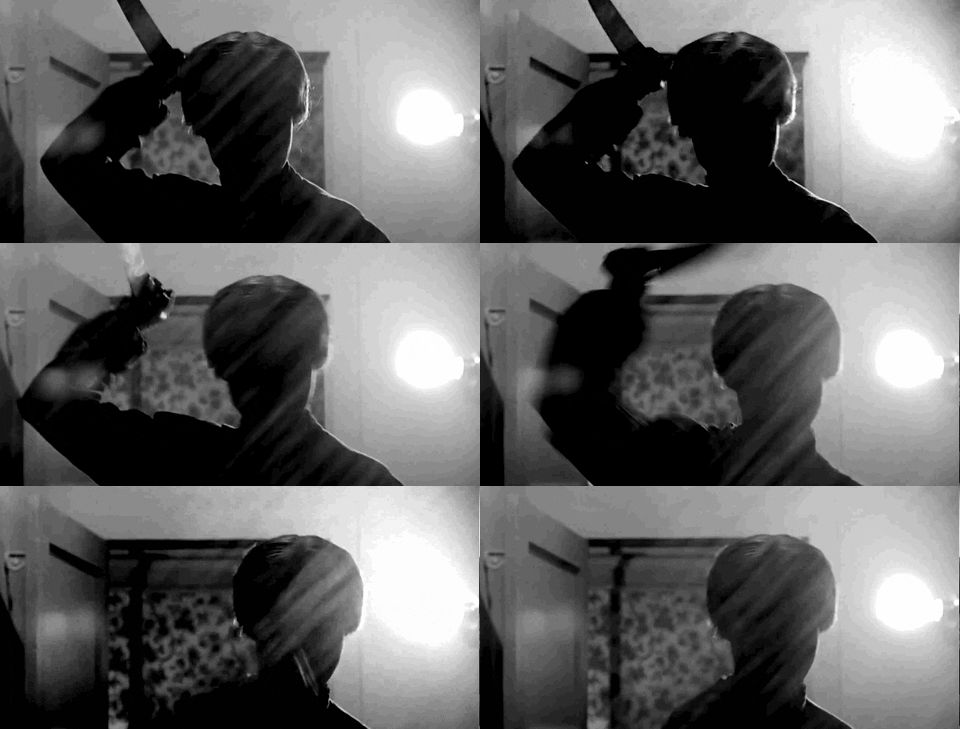
  • Black and white, or other coloured filters can give shots a new dimension. Black and white scenes usually look classy or old-fashioned, or can symbolise a flash back or memory to another time and place. 
 
This shot from Psycho in the black and white filter disguises the murderers face, casts more shadows and creates mystery to give an overall scarier feel. 

  • Colour and lighting play a role together - lighting can affect the entire atmosphere or view of a shot, but the colours are physical within the mise en scene.
  • Colour temperature is also a crucial technique used in film - dark tones, blues, purples and greys are usually cold or sad, whereas yellows, oranges, pinks and whites connote a warmer, happier feel. Therefore, colour affects the mood of a scene, and this is delivered though the context of what is happening at particular a moment. 

For example:
Jack's death scene in Titanic is depicted as a devastating, sorrowful moment through cold blue colours and a dark, limited palette of night-time hues.


In the scene where Jack draws Rose, colours are warm (golds, oranges, pinks and browns) to represent his admiration and lust for her, creating a romantic, heart-warming feel.

  • Colour represents character personality - what they wear presents them in a certain way, and is highly important to make them appear realistic and believable, but this doesn't only rely on the style of their costume; the colour is a big contributor. 
For example: The character of Sandy in Grease wears pale yellow and white (shown below), which are soft colours, showing her innocence and purity. However, when she appears at the end of the movie, her clothing changes to red and black, instantly portraying her as a sassy, rule-breaking trouble maker, with an aura of sexiness and heat. Therefore, showing her personality in a completely different light. 


  • The colour wheel/ spectrum has individual associations too. Each colour can represent or symbolise different things: feelings and emotions, atmospheres and moods. This is incorporated into film to help the audience relate, sympathise or feel a certain way in response to the colours they are seeing. 


  • Lastly, colours having meaning - these can be shown in film in elements of mise en scene or location. The table shows various associations with basic colours:


The characters of Disney Pixar's Inside Out are a really simple example of colour meaning, as each character's personality are reflected through their colour. This is more about the emotions that colours connote. 

Image result for mean girls room

The pinks and reds of Regina George's bedroom in Mean Girls shows her as being girly, spoilt, sweet and princess-like. 


The blackness of these shots from Maleficent shows the how the villain is evil and powerful.

Greens and blues in The Sound of Music help present the beauty of nature, life, faith and freedom. 

Horror Media Theories...

In order to appropriately create an opening to a conventional horror movie, we established that research and understanding of appropriate horror media theories was a necessity as part of our construction.

  • Kaminsky- That weapons such as knives, are a personal extension of our limbs thus are favourable in preference to guns, due to the killers performance of more personal and intimate deaths.

  • Wes Craven- The conduction of a murder within a safe environment, promotes more fear into the audience for example the home. Moreover, the youth that star within the film have inherited parental problems, hence are being punished for their parents misdemeanours. 

  • Carol Clover- That the murderers themselves are driven by an issue associated with their childhood or alternatively are sexually disturbed at present. This ties with the female killers being renowned for their gender confusion. The motivation itself can either be due to the killers sadism (joy of inflicting pain on others) and/or masochism (joy of inflicting pains on themselves). Additionally, the confining walls that the victims see as safe to keep the killers out, transforms into a prison trapping them in a restricted area with aforesaid killers.

  • Stephen Prince- "Like other genre movies, any given horror film will convey synchronic association, ideological and social messages that are part of a certain period or historical moment. One can analyse films in terms of these periods or moments, much like they can do with gangster movies. But unlike this genre, horror also goes deeper, to explore more fundamental questions about the nature of human existence, and other questions that, in some profound ways, go beyond culture and society as they are organised in any given form or period"- He sees horror as an elite genre that includes concepts of "real life" aspects.
  • Noel Carroll- Within his essay the "Philosophy of Horror" he created a number of phases included within the horror genre. The initial was the "Onset Phase"-where the disorder is created such as the monster; followed by the "Discovery Phase"- characters of story inevitably discover the disorder; then culminates to the "Disruption Phase"- characters thus destroy the source of disorder in order to restore the normality.
  • Todorov- Alternatively, he created five stages towards the horror narrative: the initial equilibrium stage where there is normality or the situation is neutral; then an event disrupts the equilibrium this can be an event or a character or an action; thus main protagonist necessarily recognises the disruption which can happen over time or at one particular moment; therefore they attempt to rectify the situation trying to change what has happened and transform said disruption; due to this equilibrium is restored however due to the transfiguration of that are either good or bad etc, there are differences to the original equilibrium. 
  • Propp- Kladimir Propp studies the Russian tales of folk etc and concluded that the plots are directed by certain types of characters, from these you can produce 31 possible stages within a narrative shaped by the following 7 roles that any character assumes: the villain who inevitably struggles with the hero; the donor who prepares the hero with a magic or helpful agent; the helper who assists and transfigures the hero; the princess which is the ultimate goal; the dispatcher who sends the hero off; the hero who departs on appropriate search and finally the false hero who claims and appears as the hero yet isn't. 
  • Claude Levi- Strauss- in order to make sense of the world the people and events that occur are of binary opposites with all narratives transfixed around this conflict e.g good vs evil, peace vs war, protagonist vs antagonist, humanity vs technology, ignorance vs wisdom, domestic vs foreign/ alien.

Horror Micro Features as Narrative Conventions

  • Generate strong emotions of shock, fear and revulsion
  • Point of View camera shots 
  • Dark chiaroscuro lighting
  • Jump cuts


Horror Characters as Narrative Conventions

  • The Monster
"Unnatural relative to a cultures conceptual scheme of nature. They do not fit the scheme; they violate it... monsters are in a certain sense challenges to the foundations of cultures way of thinking"- Carrol 1990:34
"It is the idea of 'Otherness' which is the key to defining the horrific element of the monster"- Hutchings 2004:102
"Simply being dangerous is not in itself enough to bestow monster status... these monsters should not only be dangerous but 'impure' or 'unnatural' as well"- Hutchings 2004: 34-5

  • The Final Girl- prior to the slasher genre it was rare to discover a female protagonist, yet the final girl is distinguished from other teenage girls due to her unessential need to be rescued by a male counterpart. Her masculine qualities of watchfulness and aggression combined with her male sounding name, provides her with conventionally male abilities of knowledge. Since she doesn't require reliance on a male hero to save her, she is routinely placed within situations where she independently saves herself: she is also active yet sexually inexperienced, prioritising knowledge and innocence. This theory was culminated by Carol J Clover.


Sunday, 15 November 2015

Initial Location Idea

Location for Horror in general
Initially, when we were thinking about our genre which is horror we distinguished the most popular and efficient locations to portray and highlight fear, yet also inhibit the natural setting demonstrated in the psychological genre. Thus the most popular locations we found were:
  • Car Parks or Walk Ways
  • Bedrooms or Houses (especially in Home Invasion genres)
  • Derelict buildings especially hospitals or schools
  • Dungeons or Basements
  • Parks or Woods
  • Cemeteries and graveyards
  • Churches and castles
From these we found the most efficient at portraying the fear we wished to execute, would include the more secluded or abandoned locations to improve the concept of isolation: thus finding the home setting inappropriate. 

Initial Settings Found

  • Greenwich Foot Tunnel- this foot tunnel open to pedestrians runs from Greenwich to the Isle of Dogs across East London. It consists of a spiral staircase and large lifts, which we found could be used particularly effectively with chase scenes especially across the tunnel itself: since it has an affect of seeming infinite (efficient to provide disorientation to the audience). Point of view shots from either the victim or other beings chasing the victim, could be particularly effective in this location also. Problems with this location, could be how its accessible to the public, thus concepts of costume such as masks, or special effects makeup such as injuries, combined with any use of weapons etc could provoke fear and upset individuals.
  • Severndroog Castle- this castle again open to pedestrians is located at Castle Wood with access being through tickets. However, this is restricted to 11am- 3pm on Thursdays, Fridays and Sundays, which could provide constraints when it comes to filming etc. It's especially dated, providing particularly good mise en scene if we were including the element of a spirit from this dated era; again the views here are particularly proficient for establishing shots etc or long shots of the individual function rooms or exterior of the building (surrounded by woods this is particularly creepy).
  • Red House-if we were to use a house, it would most likely need to be one that was of a large stature to produce the effect of the unknowing, the mysterious location of a killer or supernatural being within a large mansion or house. The Red House is run by the National Trust, previously owned by William Blake, it is again open to the public on Fridays, Saturdays and Sundays. This would be particularly affective for home invasion genre, or could be efficient for paranormal also, yet the problems could be the access to the building with it being run by the National Trust and being a listed building.  

  • Hidden Tunnel By London Bridge Station- this underground passageway that runs into the centre of the Galleria is signposted as a route to the local gym from London Bridge station. Built originally, to house a small shopping arcade with a local toilet, it is now an easy underpass though rarely used by the public due to their lack of knowledge of its location. What I found particularly iconic, was the carpeted tunnel that I thought had visual aspects of the ones within the Shining, they again provide that disorientating aspects to confuse the audience, efficient for chasing scenes or ones that could focus on just one character who would contrast with the setting. 
  • Oxleas Woods- wooded locations such as Oxleas Woods are particularly effective when using cults within horror, since the natural setting contrasts to the unnatural aspects of the cult. Sacrificial acts or chants etc, usually take place within these settings; alternatively, it could be powerful for chase scenes or monster horror, since the contrasts again of the unnatural and natural aspects of these monsters or the situation, within thriving woods is unnerving. The anticipation or fear of being lost, is appropriate for such location, which could be practical if we did a psychological horror based on fears.

  • Brenchley Gardens Cemetery- graveyards themselves isolated are particularly fearful places to be especially when alone or at night etc, yet Brenchley I found as more so due to its infamous nature of being overcrowded with not only the amount of graves but with the amount of dated or old decrepit gravestones that we would not usually be accustomed to. Graveyards within horror are particularly compelling in possession or paranormal, with aspects of ghosts or spirits; if we were to shoot here it would be preferential in fog or at night, yet both of these circumstances are difficult with weather and also closing cemetery hours. It would be particularly difficult to shoot here, due to the religious and social connotations, since many individuals appropriately may find it disrespectful. 
  • St Paul's Church- within Deptford this church I find particularly iconic due to its breathtaking steeple. Within monster horrors for example vampire or paranormal genre, it retains aspects of an era that would be appropriate to both: the tombs below being used for Interview with a Vampire. Moreover, the religious aspects could be appropriate for occult traditions or even a murderer or psychological fears could be presented in the seemingly protected safe environment. The problems again refer to the religious connotations that may be disrespectful to God or the Priest, yet due to its stance within a main city, it may be difficult finding time to film when the public are not using it appropriately for their personal prayer.
  • Chislehurst Caves- these caves open to the public are particularly useful for the psychological horror when associated with fears or phobias, referencing to that of claustrophobia or darkness. Its particularly useful also for the monster or paranormal genre, yet would have to be filmed when no tour was on yet we would probably need a tour guide in order for us not to get lost. The problems with this location, is having to keep going back to re film aspects of the piece, whilst also the aspects of sound and lighting within the caves despite their visual and aesthetic properties being particularly effective.

Friday, 13 November 2015

Initial Ideas

For the past couple of weeks, whilst researching various horror sub-genres, we have created a some initial ideas we may include in our final piece.


Initial ideas:

  • Reverse chronology/ rewind - inspired by Christopher Nolan's "Memento" (2000), the film is played in the reverse order, starting with the end scene and progressing backwards to unravel the story. The film also incorporates black and white scenes running parallel to the story in the correct order, splitting up the main film, creating mystery and clues as to what and why certain events have happened. We took inspiration from this to come up with an idea (working best in a psychological/ possession sub-genre), of the effected character or victim rewinding in time to become human again. For example, showing the possessed in action, then sequencing the scenes backwards using clever editing to reverse or "backtrack" how the character became this way. We did consider a desiccating zombie to play this role too, but decided not to do this sub-genre as our knowledge on this is restricted.  


SKIP CREDITS TO 1:57


  • Montage - we plan to include a montage to our opening, quickly cutting to and from different clips and locations to create depth and movement to the piece. It will help create a lasting impact, and we want the piece to be paced and interesting. 


  • Tunnels - one of our main location ideas is underground tunnels, or dark public places. The Greenwich foot tunnel is dark, gloomy and atmospheric - perfect for what we have in mind if doing a psychological sub-genre, to initiate a sense of urban realism combined with "normal" characters. The foot tunnel runs under the River Thames between Cutty Sark Gardens and Island Gardens, on the Isle of Dogs. It is 1,217 feet in length and 50 feet deep.