Showing posts with label conventions. Show all posts

Wednesday, 27 April 2016

Codes and Conventions of film genres

Codes and Conventions

Action
  • Fights involving weapons such as guns and knives
  • Set in a big/modern city such as London or New York
  • Multiple deaths including that one really liked character
  • Futuristic vehicles and big explosions
  • Cat and mouse chases
  • Villains and Heroes
Comedy
  • It's dependent on the type of comedy but usually set in generic places; bright, well populated towns and cities. 
  • The camera tends to be very naturalistic, medium shots are used generally throughout to present dialogue and facial expressions. 
  • There are many stereotypes, especially if teen comedy and set in a high school. You usually have the dumb person, the smart person and the socially awkward. 
  • Sound is so important with comedy films as the dialogue needs to be extremely clear for it to be funny. 
  • Three significant types of comedy; slapstick, dark humour and wit/wordplay. 
Horror
  • Urban environments - dark streets/ narrow alleyways and empty houses
  • Often dark colours such as red and black to represent darkness, evil and blood etc
  • Common mise en scene objects include masks, weapons and religious icons etc
  • Lighting is expressive and non-nauralistic, where low-key lighting is used to create dark shadows.
  • Always, a hero, a final girl or a villain- most commonly being a man. The hero would most likely have a mission to accomplish ideally to defeat an evil villain. 

Sunday, 22 November 2015

Colour within Film - Meanings and Importance

Colour is a powerful tool, sometimes going by un-noticed in film. Colours are there not only for a visual satisfaction and impact, but for representation too. I have researched into the importance of colour, and what certain colours connote within film.


  • The colour palette for film is devised and worked on by the directer alongside photographers, production designers and costume designers.  The colour is then controlled on set and in post-production. Colour can help to tell a story in itself, depending on meaning, symbolism, themes or emotions and moods that it is projecting. It can largely dramatise scenes and influence how the audience feels about particular characters, decisions or events that occur in film. Factors that play a role in colour are in almost every aspect of film - from the characters, costumes, settings, lighting, time of day and situations that are happening, the overall look of a shot is determined by its visual presentation (hence why colour is so important). 
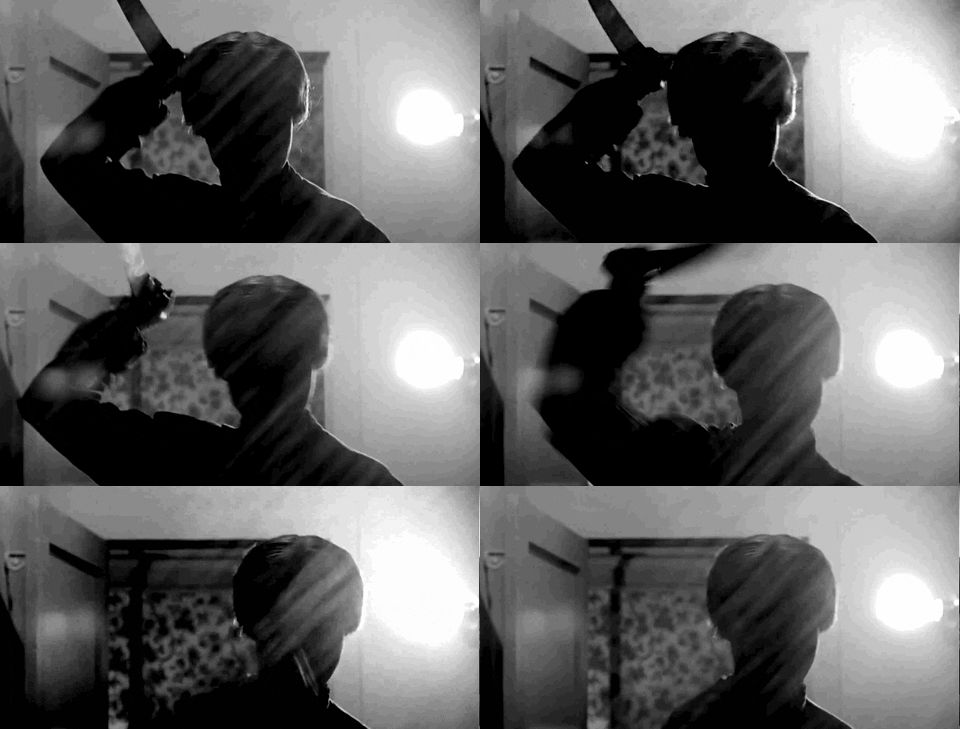
  • Black and white, or other coloured filters can give shots a new dimension. Black and white scenes usually look classy or old-fashioned, or can symbolise a flash back or memory to another time and place. 
 
This shot from Psycho in the black and white filter disguises the murderers face, casts more shadows and creates mystery to give an overall scarier feel. 

  • Colour and lighting play a role together - lighting can affect the entire atmosphere or view of a shot, but the colours are physical within the mise en scene.
  • Colour temperature is also a crucial technique used in film - dark tones, blues, purples and greys are usually cold or sad, whereas yellows, oranges, pinks and whites connote a warmer, happier feel. Therefore, colour affects the mood of a scene, and this is delivered though the context of what is happening at particular a moment. 

For example:
Jack's death scene in Titanic is depicted as a devastating, sorrowful moment through cold blue colours and a dark, limited palette of night-time hues.


In the scene where Jack draws Rose, colours are warm (golds, oranges, pinks and browns) to represent his admiration and lust for her, creating a romantic, heart-warming feel.

  • Colour represents character personality - what they wear presents them in a certain way, and is highly important to make them appear realistic and believable, but this doesn't only rely on the style of their costume; the colour is a big contributor. 
For example: The character of Sandy in Grease wears pale yellow and white (shown below), which are soft colours, showing her innocence and purity. However, when she appears at the end of the movie, her clothing changes to red and black, instantly portraying her as a sassy, rule-breaking trouble maker, with an aura of sexiness and heat. Therefore, showing her personality in a completely different light. 


  • The colour wheel/ spectrum has individual associations too. Each colour can represent or symbolise different things: feelings and emotions, atmospheres and moods. This is incorporated into film to help the audience relate, sympathise or feel a certain way in response to the colours they are seeing. 


  • Lastly, colours having meaning - these can be shown in film in elements of mise en scene or location. The table shows various associations with basic colours:


The characters of Disney Pixar's Inside Out are a really simple example of colour meaning, as each character's personality are reflected through their colour. This is more about the emotions that colours connote. 

Image result for mean girls room

The pinks and reds of Regina George's bedroom in Mean Girls shows her as being girly, spoilt, sweet and princess-like. 


The blackness of these shots from Maleficent shows the how the villain is evil and powerful.

Greens and blues in The Sound of Music help present the beauty of nature, life, faith and freedom. 

Wednesday, 11 November 2015

Conventions of Slasher sub-genre


Typical final girls


The Final Girl - confronts the killer, usually innocent or a virgin, overcomes the "monster", proves to be strong throughout. Usually plain and bland, brunette, represents a young innocent woman, the surviver. 

Monster/ psychotic killer who is usually masked - remains unknown, a mystery, generally revealed at the end. Uses voices or games to trick with characters.

Famous killer characters

Location - usually a small sub-urban town, where the characters are familiar with. Frequently isolated, deserted - to provoke curiosity. High schools (eg 'prom night'), summer camps or creepy houses are a common events for slashers to attack.

Weapons - sharp instruments used to attack. These include knives, swords, axes, machetes, arrows, chain-saws, power drills, hammers, spears, darts, pitch forks and hatchets.

Characters - frequently used character types include:
"Bimbo", prom queen, cheerleader or popular girl - usually the first to be slaughtered,  provocative, and "air head"/ "dumb blonde"
The jock/ the nice guy - popular male in school, usually has a girlfriend
The outcast - someone who goes against the rules, rebells or stands out
The "nerd" (who sometimes develops into the final girl) - has courage and strength
The killer - masked monster figure
Party scene in Scream displaying a range of typical characters


Monday, 9 November 2015

Conventions of Science-Fiction Horrors


What are Science-Fiction/Horror Fiction Films:
This type of horror sub-genre uses imaginative concepts involving pushing the boundaries of science to create things that seem plausible but we cannot be sure can happen, the result is a film that can leave the audience confused over what they've just watched and applies a scare factor that works off of making the audience question the film.


Focuses:
These films focus on aspects such as the following:

  • futuristic setting
  • faster-than light travel
  • technology

In the Event Horizon, a group of astronauts are sent to a ship that has mastered the ability to travel from point A to point B the quickest, however this manipulation of science causes the captain of the ship to be possessed and the ship to be alive. The captain and the ship slowly start to pick off the crew.
  • extraterrestrial life
  • supernatural happenings and beings 


In Resident Evil Afterlife, one woman goes around to continue a fight against the umbrella corp and to round up survivors from the plague of the walking dead. When they hear about a safe haven in Los Angeles, they head towards with hope but all they find is a city infested with zombies.

Conventions:
Sci-fi horror films use a range of techniques to achieve the desired effect of making the ideas that seem too far-fetched to appear real and authentic.
They also use futuristic ideas and themes to stretch the bounds of the imagination to create a film that goes against what we expect to be real
The lighting used in space films is usually bright with a blue tint for the majority of a film, changing to red/green to show of the antagonists. This causes the audience to automatically know what side each of the characters are on and this identification allows you to keep up worth the action. Lighting can also be used for dramatic effect, for example in the Event Horizon, the core of the ship has many white lights on it which make it the more dominant object in the room and brings the audiences focus onto itself. The surrounding area of the room not lit up by the headlight on the space helmet results in the core of the ship gaining a position of power due to the contrast of light and colour in the room.
Often the reality in which the film appears will be in an alternate planet Earth, to give the film a familiar yet alien atmosphere
Main characters usually give some style of narration, whether it to be describing a futuristic element of technology used in the film or to exaggerate the relationships between characters or people's to fill in the audience with the relevant back story and bring them up to speed with the timing of the film (which also usually happens to be in the future, allowing for futuristic technology/architecture to be easily accepted).

Sound is widely used to accentuate the points being made/aspects of the film. Whether they are the ambient digetic sounds of a mad scientists heavy footsteps down the corridor to his/her lab or the non-digetic sounds of a heartbeat when faced with the enemy, sound is used to draw in a viewer to remind them of how everyday sounds can be manipulated for effect.


Wednesday, 4 November 2015

Conventions of Psychological Horrors...


What are Psychological Horrors?
Psychological horror is a sub-genre of horror where the tension build up is reliant on the emotional instability, fears of the present characters within it and hidden truths about the characters, based on past events or regrets they have: the viewers can relate to the concepts of ordinary people within ordinary settings, yet the elements from the paranormal genre for example the tape in "The Ring" are the aspects for which the audience cannot relate to the plot completely.

Categories of Psychological Horror 
  • Phobia and Isolation

Phobia and Isolation primarily focuses on fears of the human mind that will be present in various members of the audience, providing a relation to the audience through shared nightmares, or intense phobias. This is a trailer from the film "Descent", despite aspects from the monster horror genre being present here this film relies greatly on the fear of the audience being in a confined, isolated setting that focuses primarily on claustrophobia.
  • Madness and Paranoia

Madness and Paranoia recognises and illustrates the human capability of being driven mad, the lack of sanity of the previously "normal character" is a breakdown over time the audience witness; it generally uses a killer who will be the former "trusted" character, thus on their murder rampages they execute aspects of the slasher genre are executed. Here is an iconic scene from Kubrick's "The Shining" where we witness the father, become driven to insanity by a paranormal presence, his development into madness penultimately leads to his attempted murder of wife and child. 

  • Home Invasion

Home Invasion focuses on the natural supposedly "safe" settings of our homes, yet interrupts the trust we have with our homes since the killers or paranormal beings invade these areas proving that nowhere is safe especially these. To present this I used "You're Next" which is where a family spend the weekend away as a vacation which is distorted and switched into a massacre by a group of individuals dressed in animal masks, who hunt the family down within the large house they have stayed in: death again like the madness category is generally physical weapons executed by normal people, in this case traps being set within rooms or weapons such as cross bows being present.


Conventions of Psychological Horror 
  • Focuses on reality or everyday life.
  • "Based on true events" or  "Based on actual events" can be used by directors to spur fear into the audience, providing the concept that it could happen to them also, this is recognised at the beginning of the iconic film Wolf Creek where the plot was partly based on the events of the backpacker murders committed by Ivan Milat in the 1990s.
  • Rely on characters beliefs, fears or hidden truths that will be revealed gradually to the viewers.
  • Ordinary people exert horror on other characters, instead of a monster or actual paranormal being for example in American Psycho he is a renowned unassuming businessman.
  • "Killer" appears normal, but face is rarely seen to provoke mystery and suspense.
  • Weapons are rarely physical, but focus on killer(s)'s twisted mind for example Hannibal Lecter being a cannibal.
  • Settings- sense of realism, since we live in such surroundings for example: big houses as illustrated in "The Strangers"; woodland locations; warehouses; schools or hospitals as established in Session 9.
  • Flashbacks informing audience of why killer has reached such a state,  to provide understanding to the viewers.
  • Sound/ Music: Contrapuntal sound where it does not match action on screen, contradiction of whats happening to the viewers, providing confusion to the audience also.
  • Antagonist comes for revenge on the victims.
  • Victims will differ but females are targeted most (due to apparent vulnerability).
  • Child killers are often too, for this example Esther in "Orphan" who has a hidden secret.