Showing posts with label colour. Show all posts

Tuesday, 26 April 2016

Make up decision

 
Make Up
 
Here are some of the initial ideas we had in terms of what make up should be used on our main protagonist and (any other characters if we choose to add any).

Eyes

We thought it would be suitable to use plain and dull colours to represent the character's personality, so we selected grey and black. Here are the three stages in applying the eye make up:

Stage 1 -


Stage 2 -


Stage 3 -


Lips

At first, we thought it would be effective to use nude lipstick to create pale lips making the character's appearance somehow rough. But after some consideration we wanted the lips to come across as more extravagant looking. Using dark red and black lipstick created this look that we liked very much.

2nd idea


Hairstyles
We tried out a variety of different hairstyles to get a sense of what would best suit our character. We ended up with the decision that having loose hair with no particular hairstyle would show the 'rough' side of her personality. We made the decision to not use a black wig on our actress as her natural hair colour is red in which we feel is perfect for the role she is to take on as we aim to stay clear of the stereotypical victim look. Here are examples from the internet of the few variations we tried out:

Style 1 - Smart ponytail


Style 2 - Loose ponytail


Style 3 - Hair down


Style 4 - Messy Bun


Style 5 - Two ponytails


Monday, 18 January 2016

Editing -Tools/techniques

Whilst editing our main coursework project, we also were involved in editing a short montage film which allowed us to further develop our understanding of using Final Cut Pro and were able to use more complex techniques than just cutting the video clip down to make it fit to our 2-minute time frame.

In Final Cut Pro, there is a timeline where you drag your clips in to allow you to rearrange, add transitions and effects, change the timing of clips etc... this is where the editing of a clip occurs.


The first clip was a view of a light in a tunnel, the light becomes blurred towards the end of the clip but originally happened too quickly and didn't fit the tone correctly, to combat this, were slowed down the clip

Blading the clips was useful because it allowed us to keep all of a clip that we wanted but it meant that we didn't have to keep the whole clip as one extended clip, we were able to split it up and re-order the different parts of a clip to maximise its effect. This further enabled us to make quick jump cuts from one clip to another, along with the use of overlapping clips.
We also used overlapping the clips when there were an increased amount of peaks in our soundtrack, this enabled us to make a quick series of cuts between our characters, e.g.: when both characters faces are seen as a series of quick cuts, we used this as a contrast between the two characters, showing them both at a close-up.


Reversing our clips gave a creepy aura to some of them; Silvia, our actress, had done a great job of presenting our deranged protagonist/antagonist and when we reversed the clips e.g.: when she wiped her make up off her face, it became a lot more effective to have the clip in reverse, causing people to cringe and recoil away when they watched what they couldn't perceive as normal behaviour.
Alongside the reversed clip of Silvia wiping her eyes, the music speeds up at this point and we used this to repeat the clip in two quick cuts to the peaks of the music to further dramatic effect.
Viewer:
The program enables you to edit the clips that you have inserted into the timeline. There is a variety of different effects and transitions that can be applied. From this tab in the program, you can apply such things as: transitions, effects, sound effects, colour corrections, photos, text, intros and outros. The heading of the timeline allows you to change the duration/speed of the clip, either slowing down or speeding up the footage, you can get it down to a very precise measurement as there is a customisation of the speed change rate.


We were able to make the clips meet the beat of the music by slowing down and speeding up certain clips, to make the first clip be in time to the beat, we slowed it down for both the effect of sound and video within the clips was enhanced by doing this.
We reversed the clip of Silvia crying to make the tear go back up her face, we also sped the clip up, this helped us to fit all of tear's motion in the sequence without the clip going on for too long.

Sunday, 29 November 2015

The Use of Symbolism in Horror...

Metaphorically a number of aspects of plots, or attributes for misé-en-scene emphasise and highlight the mood, theme and concept of the film itself, they can intensify the tone and depth to the piece and overall play a huge part in the construction especially of props or setting.
The most commonly used symbolic aesthetics to a film include:

  • Religious Symbols: Prevalent especially in the occult genre, due to the nature of opposite mediums of life and death, devil and God, good and evil, inner and outer demons etc, religious symbolic relics can be in reference to satanic, occult or voodoo rituals. Illustrated below with the Devil Inside.

  • Death: Used as a form of foreshadowing for either certain characters or to illustrate it as a distinctive theme with objects such as coffins, gravestones, graveyards, angels of death, skulls, skeletons, corpses etc; for example the disfigured faces in Jacobs Ladder seen below, along with the birds used as a presentation of the body's decay.

  • Colours: Representationally used a symbolisation of a characters powers or nature as either good or evil. The colours such as red despite being connoted with passion or lust, can denote danger or evil; whereas in opposition, the hero or good characters will generally be recognised in earthy colours that are of a neutral whiter shade.


  • Light: Despite its usual depiction of hope, light can also demonstrate death due to the concept of its transition into the afterlife; minimal light from candles, torches etc since it demonstrates a menacing unknowing of what lies in the shadows that cannot be illuminated by these objects. One of my personal uses of light, is the light vision POV from Silence of the Lambs as demonstrated below. 

  • Weapons: Weapons are especially used in Slasher genre, due to their phallic reference of masculine power with the final girl inevitably castrating him; weapons are generally more of those of an extension of our arms to make the killings more personal, in comparison to a gun etc. This is especially evident in Texas Chainsaw Massacre.

  • Fabric: The use of material covering settings, props or people, can disorientate our viewing of a film and enhance the mystery behind it. The flimsy nature of it, provides unstable protection for a protagonist providing a barrier between them and what fears them. For example in the Others fabric is used in the coverings of the furniture, or with the use of curtains to demonstrate the barrier of the real and unknown.

  • Doors and Windows: Can present the opposite concepts of confinement or freedom, looking out a window or passing through a door can be the idea of being trapped within an area or running from one (even though it can be into something just as worse). The suspense of not knowing what is looking in through your window, or whats behind or through the door aids to the mystery and jump nature that horrors embody. Both examples below being from the Woman in Black.


  • Labyrinths/ Mazes: To heighten the concept of the protagonists lack of control, and inability to understand or assess the situation or dilemma they find themselves in. To concept of escaping seems unlikely and death always seems inevitable, due to its basis of the minotaur concept. The most famous examples being Pan's Labyrinth.
  • Mirrors: Often used in psychological horrors, due to the reflective qualities presenting the concept of multiple personalities; with these being shattered once the glass is broken. Yet to include the horror genre more, we see mirrors reflecting sudden dangers of a ghost, monster or murderer. 


  • Ropes: Its initial symbolic meaning of perhaps death as a noose, flogging or torture, yet most commonly as bondage can in contrast mean survival or means of escape. The most common use of it is most definitely is with bondage, to resemble the concept of being trapped or hunted. Especially evident in The Gallows.

  • Keys & Locks: representational of confinement, or hidden truths and secrets (a convention of psychological horror) which are trapped behind a door or basement. For example this is the main feature of The Skeleton Key.


Sunday, 22 November 2015

Colour within Film - Meanings and Importance

Colour is a powerful tool, sometimes going by un-noticed in film. Colours are there not only for a visual satisfaction and impact, but for representation too. I have researched into the importance of colour, and what certain colours connote within film.


  • The colour palette for film is devised and worked on by the directer alongside photographers, production designers and costume designers.  The colour is then controlled on set and in post-production. Colour can help to tell a story in itself, depending on meaning, symbolism, themes or emotions and moods that it is projecting. It can largely dramatise scenes and influence how the audience feels about particular characters, decisions or events that occur in film. Factors that play a role in colour are in almost every aspect of film - from the characters, costumes, settings, lighting, time of day and situations that are happening, the overall look of a shot is determined by its visual presentation (hence why colour is so important). 
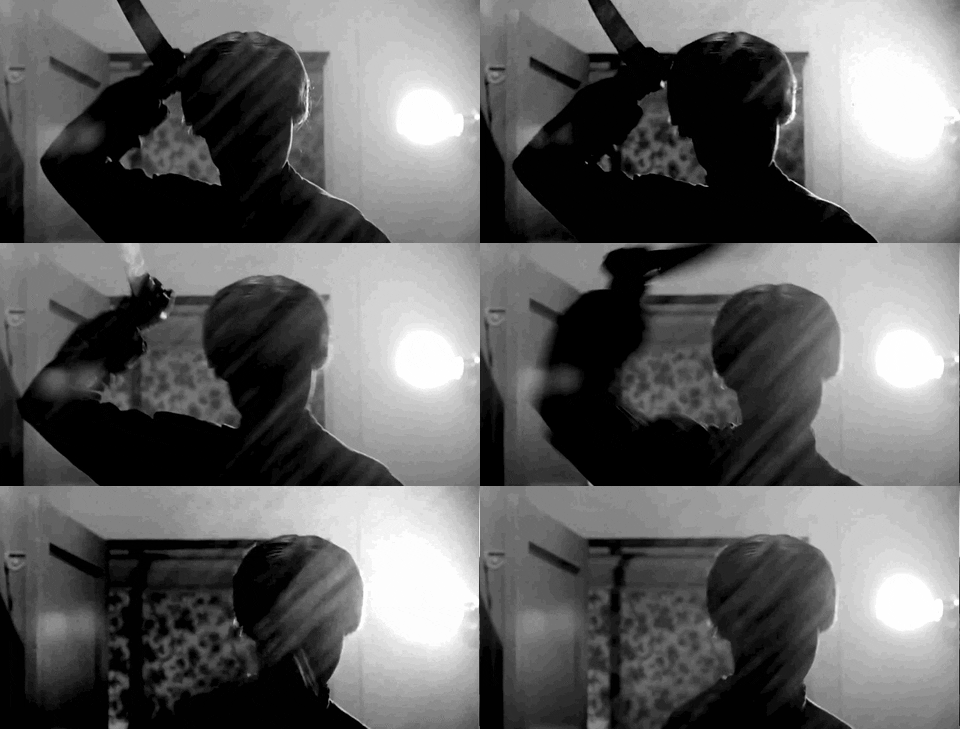
  • Black and white, or other coloured filters can give shots a new dimension. Black and white scenes usually look classy or old-fashioned, or can symbolise a flash back or memory to another time and place. 
 
This shot from Psycho in the black and white filter disguises the murderers face, casts more shadows and creates mystery to give an overall scarier feel. 

  • Colour and lighting play a role together - lighting can affect the entire atmosphere or view of a shot, but the colours are physical within the mise en scene.
  • Colour temperature is also a crucial technique used in film - dark tones, blues, purples and greys are usually cold or sad, whereas yellows, oranges, pinks and whites connote a warmer, happier feel. Therefore, colour affects the mood of a scene, and this is delivered though the context of what is happening at particular a moment. 

For example:
Jack's death scene in Titanic is depicted as a devastating, sorrowful moment through cold blue colours and a dark, limited palette of night-time hues.


In the scene where Jack draws Rose, colours are warm (golds, oranges, pinks and browns) to represent his admiration and lust for her, creating a romantic, heart-warming feel.

  • Colour represents character personality - what they wear presents them in a certain way, and is highly important to make them appear realistic and believable, but this doesn't only rely on the style of their costume; the colour is a big contributor. 
For example: The character of Sandy in Grease wears pale yellow and white (shown below), which are soft colours, showing her innocence and purity. However, when she appears at the end of the movie, her clothing changes to red and black, instantly portraying her as a sassy, rule-breaking trouble maker, with an aura of sexiness and heat. Therefore, showing her personality in a completely different light. 


  • The colour wheel/ spectrum has individual associations too. Each colour can represent or symbolise different things: feelings and emotions, atmospheres and moods. This is incorporated into film to help the audience relate, sympathise or feel a certain way in response to the colours they are seeing. 


  • Lastly, colours having meaning - these can be shown in film in elements of mise en scene or location. The table shows various associations with basic colours:


The characters of Disney Pixar's Inside Out are a really simple example of colour meaning, as each character's personality are reflected through their colour. This is more about the emotions that colours connote. 

Image result for mean girls room

The pinks and reds of Regina George's bedroom in Mean Girls shows her as being girly, spoilt, sweet and princess-like. 


The blackness of these shots from Maleficent shows the how the villain is evil and powerful.

Greens and blues in The Sound of Music help present the beauty of nature, life, faith and freedom.