Showing posts with label genre. Show all posts

Wednesday, 27 April 2016

Codes and Conventions of film genres

Codes and Conventions

Action
  • Fights involving weapons such as guns and knives
  • Set in a big/modern city such as London or New York
  • Multiple deaths including that one really liked character
  • Futuristic vehicles and big explosions
  • Cat and mouse chases
  • Villains and Heroes
Comedy
  • It's dependent on the type of comedy but usually set in generic places; bright, well populated towns and cities. 
  • The camera tends to be very naturalistic, medium shots are used generally throughout to present dialogue and facial expressions. 
  • There are many stereotypes, especially if teen comedy and set in a high school. You usually have the dumb person, the smart person and the socially awkward. 
  • Sound is so important with comedy films as the dialogue needs to be extremely clear for it to be funny. 
  • Three significant types of comedy; slapstick, dark humour and wit/wordplay. 
Horror
  • Urban environments - dark streets/ narrow alleyways and empty houses
  • Often dark colours such as red and black to represent darkness, evil and blood etc
  • Common mise en scene objects include masks, weapons and religious icons etc
  • Lighting is expressive and non-nauralistic, where low-key lighting is used to create dark shadows.
  • Always, a hero, a final girl or a villain- most commonly being a man. The hero would most likely have a mission to accomplish ideally to defeat an evil villain. 

Monday, 23 November 2015

Initial Ideas on Genre

Something we came across when brainstorming our initial ideas was that we had to choose a genre for our film opening. This genre had to be well suited to the content ideas we came up with as well as the fact it had to be something we are able to use with there only being four of us. In addition it had to be the genre that best suited our group's preferences. 

Here is a brainstorm of our thoughts on the possible genres we could choose from:

Comedy
  • Can work as a low cost production.
  • Could potentially appeal to larger audiences; both younger and older audiences.
  • There isn't a conventional comedy location so would be easier to choose a place to shoot.
  • Wouldn't be everyone's comedic taste so may receive negative feedback. 
  • Can be very unrealistic.
  •  If it's not truly funny then it won't work so very risky but could also result in confusion if too much humour.
Action
  • The depth of the storyline can stay quite brief as they don't tend to have the most complex or elaborate plots.
  • It allows flexibility regarding film locations as there are no traditional action film locations, e.g. a haunted house- horror. 
  • Can allow creativity with mise en scene.
  • Very hard to keep the plot original.
  • There can be a heavy usage of props in traditional action sequences. 
  • Many action films rely on special effects and CGI resulting it generally being a high cost production.
Horror
  • Can allow creativity with mise en scene. 
  • The storyline can be simple and straightforward, it doesn't have to be complex. 
  • Can work as a low cost production. 
  • Hard to perfect and if done badly it can look terrible.
  • Mise en scene, such as blood, has to seem realistic if used, which requires skill and equipment.
  • The editing within horror films generally involves fast, jumpy shots, so lots of footage needs to be taken in order to select the best footage possible.
After much deliberation, we came to a conclusion that horror would be the best genre to show our capabilities. Nevertheless, an initial idea we came across when discussing subgenres was that we should do something both intense and attention-grabbing thus we brought the many possible subgenre solutions down to two; psychological and possession. However, before we cancelled it down to two possibilities we had the idea of basing the film opening on the zombie subgenre as we thought it would be both fun to do and it would allow us to be creative. In the end we decided that it may be too hard for the opening to look convincing and realistic which are two important factors.

Sunday, 22 November 2015

Colour within Film - Meanings and Importance

Colour is a powerful tool, sometimes going by un-noticed in film. Colours are there not only for a visual satisfaction and impact, but for representation too. I have researched into the importance of colour, and what certain colours connote within film.


  • The colour palette for film is devised and worked on by the directer alongside photographers, production designers and costume designers.  The colour is then controlled on set and in post-production. Colour can help to tell a story in itself, depending on meaning, symbolism, themes or emotions and moods that it is projecting. It can largely dramatise scenes and influence how the audience feels about particular characters, decisions or events that occur in film. Factors that play a role in colour are in almost every aspect of film - from the characters, costumes, settings, lighting, time of day and situations that are happening, the overall look of a shot is determined by its visual presentation (hence why colour is so important). 
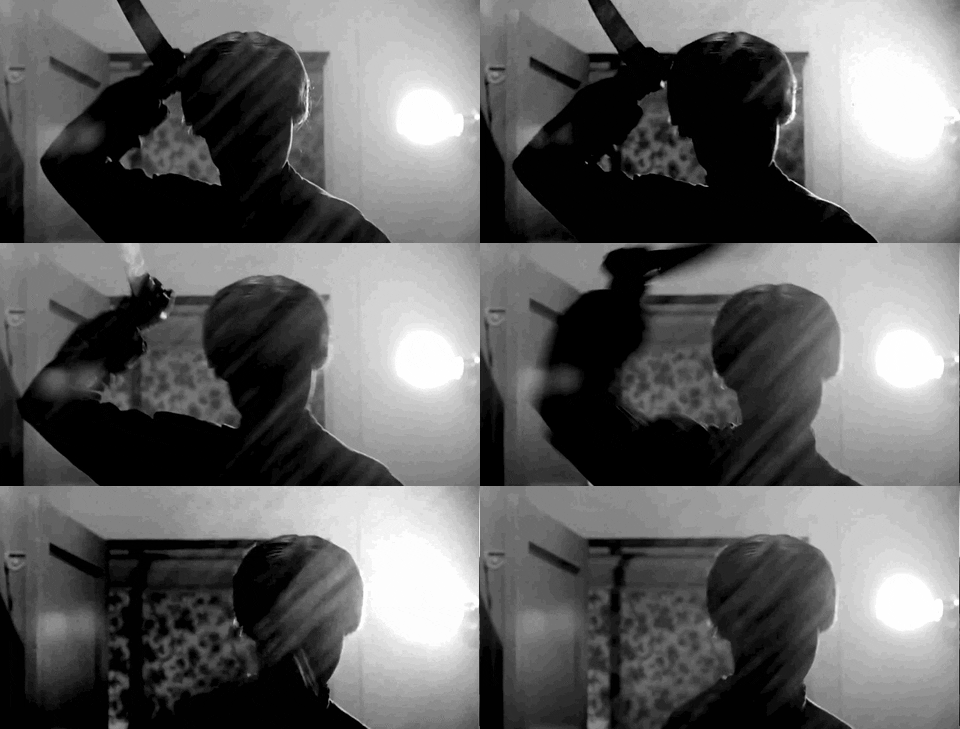
  • Black and white, or other coloured filters can give shots a new dimension. Black and white scenes usually look classy or old-fashioned, or can symbolise a flash back or memory to another time and place. 
 
This shot from Psycho in the black and white filter disguises the murderers face, casts more shadows and creates mystery to give an overall scarier feel. 

  • Colour and lighting play a role together - lighting can affect the entire atmosphere or view of a shot, but the colours are physical within the mise en scene.
  • Colour temperature is also a crucial technique used in film - dark tones, blues, purples and greys are usually cold or sad, whereas yellows, oranges, pinks and whites connote a warmer, happier feel. Therefore, colour affects the mood of a scene, and this is delivered though the context of what is happening at particular a moment. 

For example:
Jack's death scene in Titanic is depicted as a devastating, sorrowful moment through cold blue colours and a dark, limited palette of night-time hues.


In the scene where Jack draws Rose, colours are warm (golds, oranges, pinks and browns) to represent his admiration and lust for her, creating a romantic, heart-warming feel.

  • Colour represents character personality - what they wear presents them in a certain way, and is highly important to make them appear realistic and believable, but this doesn't only rely on the style of their costume; the colour is a big contributor. 
For example: The character of Sandy in Grease wears pale yellow and white (shown below), which are soft colours, showing her innocence and purity. However, when she appears at the end of the movie, her clothing changes to red and black, instantly portraying her as a sassy, rule-breaking trouble maker, with an aura of sexiness and heat. Therefore, showing her personality in a completely different light. 


  • The colour wheel/ spectrum has individual associations too. Each colour can represent or symbolise different things: feelings and emotions, atmospheres and moods. This is incorporated into film to help the audience relate, sympathise or feel a certain way in response to the colours they are seeing. 


  • Lastly, colours having meaning - these can be shown in film in elements of mise en scene or location. The table shows various associations with basic colours:


The characters of Disney Pixar's Inside Out are a really simple example of colour meaning, as each character's personality are reflected through their colour. This is more about the emotions that colours connote. 

Image result for mean girls room

The pinks and reds of Regina George's bedroom in Mean Girls shows her as being girly, spoilt, sweet and princess-like. 


The blackness of these shots from Maleficent shows the how the villain is evil and powerful.

Greens and blues in The Sound of Music help present the beauty of nature, life, faith and freedom. 

Monday, 9 November 2015

Conventions of Science-Fiction Horrors


What are Science-Fiction/Horror Fiction Films:
This type of horror sub-genre uses imaginative concepts involving pushing the boundaries of science to create things that seem plausible but we cannot be sure can happen, the result is a film that can leave the audience confused over what they've just watched and applies a scare factor that works off of making the audience question the film.


Focuses:
These films focus on aspects such as the following:

  • futuristic setting
  • faster-than light travel
  • technology

In the Event Horizon, a group of astronauts are sent to a ship that has mastered the ability to travel from point A to point B the quickest, however this manipulation of science causes the captain of the ship to be possessed and the ship to be alive. The captain and the ship slowly start to pick off the crew.
  • extraterrestrial life
  • supernatural happenings and beings 


In Resident Evil Afterlife, one woman goes around to continue a fight against the umbrella corp and to round up survivors from the plague of the walking dead. When they hear about a safe haven in Los Angeles, they head towards with hope but all they find is a city infested with zombies.

Conventions:
Sci-fi horror films use a range of techniques to achieve the desired effect of making the ideas that seem too far-fetched to appear real and authentic.
They also use futuristic ideas and themes to stretch the bounds of the imagination to create a film that goes against what we expect to be real
The lighting used in space films is usually bright with a blue tint for the majority of a film, changing to red/green to show of the antagonists. This causes the audience to automatically know what side each of the characters are on and this identification allows you to keep up worth the action. Lighting can also be used for dramatic effect, for example in the Event Horizon, the core of the ship has many white lights on it which make it the more dominant object in the room and brings the audiences focus onto itself. The surrounding area of the room not lit up by the headlight on the space helmet results in the core of the ship gaining a position of power due to the contrast of light and colour in the room.
Often the reality in which the film appears will be in an alternate planet Earth, to give the film a familiar yet alien atmosphere
Main characters usually give some style of narration, whether it to be describing a futuristic element of technology used in the film or to exaggerate the relationships between characters or people's to fill in the audience with the relevant back story and bring them up to speed with the timing of the film (which also usually happens to be in the future, allowing for futuristic technology/architecture to be easily accepted).

Sound is widely used to accentuate the points being made/aspects of the film. Whether they are the ambient digetic sounds of a mad scientists heavy footsteps down the corridor to his/her lab or the non-digetic sounds of a heartbeat when faced with the enemy, sound is used to draw in a viewer to remind them of how everyday sounds can be manipulated for effect.


Friday, 6 November 2015

Sub-genres of Horror


Before deciding what genre we would do for a coursework task we had to do a little background research on the different subgenres of Horror if we were to choose it. Here is a list of the different subgenres we found, a definition and examples of films in that subgenre.

Science-fiction Horror
This subgenre is based on scientific or technological advances, environmental changes, space and that
related to it such as life on other planets, travelling back in time and also science related disasters.

Examples of successful horror films in the science-fiction subgenre are:

Alien(1979) and Godzilla(2014)

A large egg-shaped object that is cracked and emits a yellowish light hovers in mid-air against a black background and above a waffle-like floor. The title "ALIEN" appears in block letters above the egg, and just below it in smaller type appears the tagline "in space no one can hear you scream".A giant prehistoric dinosaur-like lizard monster towering over a blazing cityscape engulfed in an inferno.
                                   
Action Horror
This subgenre involves heroes and heroines challenging themselves through a series of events including fight scenes with lots of violence. They tend to feature a struggling victim facing life-threatening situation due to the actions of a villain, they generally have a happy ending where the conclusion is victory for the hero.

Examples of successful horror films in the action horror subgenre are:

Feast(2005) and Predator(1987)

Feast (movie poster).jpgPredator Movie.jpg

Psychological Horror
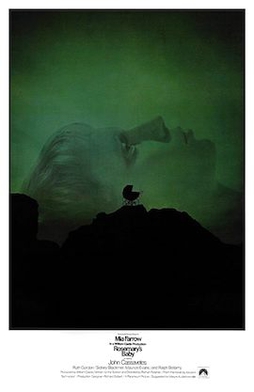
This subgenre aims to create discomfort using emotional vulnerabilities and fears. Plot twists are often used within this subgenre to build tension and characters commonly face internal battles with subconscious desires which tend to end in a disaster.

Examples of successful horror films in the psychological horror subgenre are:

Rosemary's Baby(1968) and The Shining(1980)


Zombie Horror
This subgenre revolves around zombies, which are fictional creatures- usually portrayed as reanimated corpses or virally infected human beings. Distinct subgenres have been extracted such as 'zombie comedy' and 'zombie apocalypse'.

Examples of successful horror films in the zombie horror subgenre are:

Messiah of Evil(1973) and White Zombie(1932)


Gothic Horror
This subgenre is a type of story that contains elements of both goth and horror. It may include romance that unfolds in the setting of a horror tale, usually suspenseful. Lots of the earlier horror movies were of this subgenre.
Examples of successful horror films in the gothic horror subgenre are:

Dracula(1931) and Kill Baby Kill(1966)


Natural Horror
This particular subgenre may be confused with the adventure, action and science fiction subgenre due to the many similarities, According to Wikipedia, it involves horror films "featuring nature running amok in the form of mutated beasts, carnivorous insects, and normally harmless animals or plants turned into cold-blooded killers."

Examples of successful horror films in the natural horror subgenre are:

Bats(1999) and Alligator(1980)


Splatter Horror
This subgenre focuses on graphic portrayals of gore and graphic violence; they tend to display a large amount of interest in the vulnerability of the human body.

Examples of successful horror films in the splatter horror subgenre are:

Hostel(2005) and Train(2008)


Slasher Horror
This subgenre often involves a masked serial stereotypical killer who murders teenagers and young adults through violent means.

Examples of successful horror films in the slasher horror subgenre are:

Scream(1996) and Friday the 13th(1980)

Scream movie poster.jpgFriday the thirteenth movie poster.jpg


Comedy Horror
This subgenre is a combination of elements from both comedy and horror fiction; it almost always crosses over the black comedy genre.

Examples of successful horror films in the comedy horror subgenre are:

Jennifer's Body(2009) and Teeth(2007)

Jennifer holding books in her arms sitting on a school desk, wearing a red top and short plaid skirt, in front of a blackboard with the words HELL YES! written in chalk. A hand can be seen trapped by the lid of the schooldesk. The poster bears the tagline "She's evil... and not just high school evil" in white block capitals, with the film title underneath in large red block capitals.Teeth poster.JPG


Wednesday, 4 November 2015

Considerations for producing a horror genre film opening

To achieve an effective finish for our film opening, we as group have to consider the various implications that could arise pre-production, whilst filming, and during the editing process.
I have explored the various aspects we need to include in order to create a successful opening, taking into account codes and conventions of the horror genres and sub genres - at this stage we have not yet decided on our sub genre. 

Music/ sound - the diegetic and non-diegetic sound must be effective for the piece. In order to achieve this, we need to pick appropriate sounds for the sound scape, such as an eerie ambient sound for any characters involved, incidental music and volume control to set the atmosphere. If the sound is weak or ineffective, the piece have less impact and not depict a real horror opening - tension needs to rise and we want apprehension to build via the music used. 


Location - although currently undecided, the location should be strong and denote a place of fear. The area will bring setting, atmosphere and visually effect each scene, so this is really important to get right. Some ideas we have for a phycological sub genre are hospitals, or dark abandoned tunnels, outside at night. 


Saw


The Exorcist


Costumes and characters - to produce a really successful opening, skilled actors are required to portray a convincing role. We want to form a strong character(s) who can really connect to the audience. Especially for horror genres, good acting combined with costume can show the large difference between something that is quite amateur or weak (a running screaming girl) compared with a truly petrified or possessed human being, who is almost monster like and uncontrollable. 

Lighting - for the horror genre in particular, low key lighting, hard lights and bottom lighting are commonly used. This is to achieve a menacing, eerie, dark textured image, so we plan to incorporate these styles to help give a sense of time and place, and to set a sinister atmosphere. If the wrong type of lighting is used it may take away the professionalism of the piece. 

Bottom lighting used in Insidious


Narrative - we don't want to reveal too much information, as it's only an opening, therefore the short amount of time should provoke intrigue and interest, but still leave some mystery to the story for people to want to continue watching. For the opening to be strong, we need to devise a sequence which would suggest continuity and to make the opening seem more realistic, projecting meaning and intrigue for the audience, leaving lots to confusion, mystery and anticipation (this is important for the horror genre as it ignites the watchers attention, which we need to happen in order to make an impact).